
Automation in Workflows: The Power of Follow-Ups That Actually Work
Automated follow-up workflows send the right message to the right person at the right time — without anyone having to remember to do it. For UK small businesses, the most impactful sequences are new lead nurture, appointment reminders, re-engagement campaigns and post-sale review requests. AI Bridge Club builds and manages these on GoHighLevel for SMEs across Cheshire and the North West from £97/month.
So, let's talk about something that most businesses get spectacularly wrong: follow-ups. I'm not going to beat around the bush here—if you're not following up with your leads and customers properly, you're leaving money on the table. Potentially, lot's of it.
Most business owners know they should follow up. They know it's important. But they don't do it consistently because they're too busy, they forget, or they just can't be bothered with the admin. Sound familiar? That's where automation sequences come in—specifically automated workflows that do the heavy lifting for you.
I'm gonna show you how to use automation to create follow-up systems that actually work—systems that nurture relationships, build your list, improve your customer service, and ultimately make you more profitable. And I'm not talking about dodgy spam that makes people want to block your number. I'm talking about genuine, valuable communication that people actually appreciate.
Why Follow-Ups Are Absolute Gold (And Why You're Probably Rubbish at Them)
A Fact:. According to research from Salesforce, 80% of sales require five follow-up calls after the initial meeting. But get this: 44% of salespeople give up after just one follow-up. ONE. (I personally would argue it can be way more than 5 in certain circumstances, but when you are talking about 3-5k being lost, it should make follow ups an absolute priority - so automate it!)
That's mental when you think about it. Most leads aren't ready to buy on first contact. They need time. They need information. They need to trust you. But if you're giving up after one attempt, you're basically handing those customers to your competitors who DO follow up properly.
The problem isn't that business owners don't understand the value of following up. The problem is that manual follow-ups are a proper pain in the backside. You've got to remember who to contact, when to contact them, what to say, track responses, and do it all while running your actual business. It's exhausting. That's why automated processes are the best thing since sliced bread for small businesses.
For a full overview of CRM automation built for UK service businesses, see our AI CRM Automation guide.
What Are Workflows, Really?
A workflow is basically a set of automated actions that happen when certain conditions are met. Think of it like dominoes—one thing happens, which triggers the next thing, which triggers the next thing. But instead of you manually pushing each domino, the system does it for you.
Here's a dead simple example of how a workflow actually works in practice:
Someone fills in a form on your website asking for a quote
That action triggers a workflow
The workflow might send them an immediate confirmation email, add them to your CRM, send you a notification, schedule a follow-up task for tomorrow, and queue up additional emails over the next week
All of that happens automatically. You don't lift a finger.
Now, you can build simple workflows or you can build complex ones. The beauty is that they scale with your business. Start simple, get comfortable, then add more sophistication as you go. Our System is chuffed brilliant for UK businesses because it handles everything in one place—CRM, emails, SMS, voice calls, the lot.
The Different Types of Follow-Up Workflows You Need
Not all follow-ups are created equal. You need different automated sequences for different situations. Let me break down the main ones that'll make the biggest difference to your bottom line:
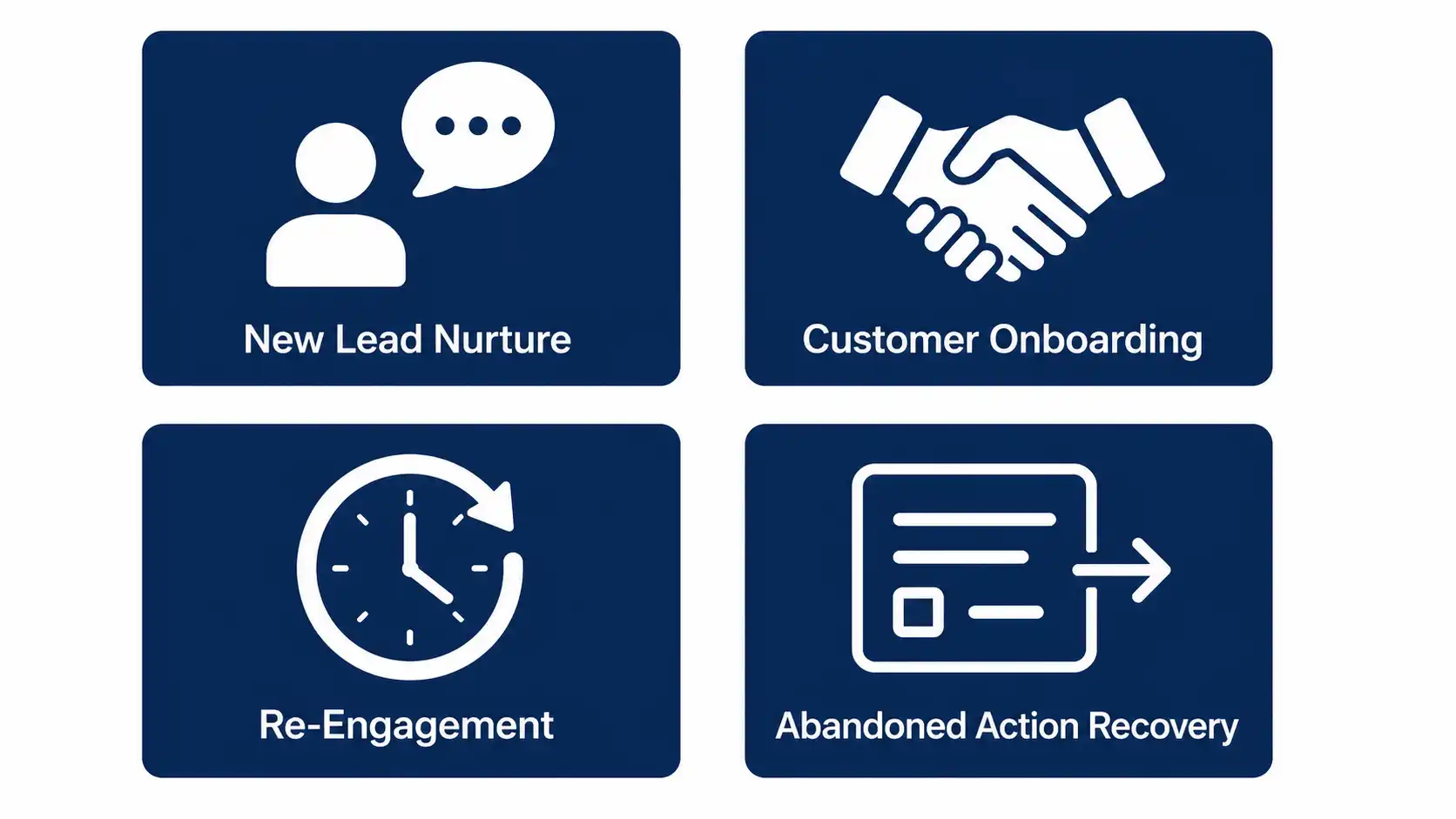
New Lead Nurture Workflows: When someone shows interest in your business but hasn't bought yet, they need nurturing. This workflow might include:
An immediate response (seriously, people expect instant replies these days)
Educational content about your services
Social proof like testimonials
Gentle nudges to take the next step
The key is to provide value, not just pester them to buy.
I've got a client who's a financial advisor. His new lead workflow sends a welcome email with a free guide, follows up three days later with a case study, then five days after that with a video explaining common financial mistakes. By the time he actually reaches out for a call, the lead already knows him, trusts him, and is ready to talk. His conversion rate went through the roof.
Customer Onboarding Workflows: Someone just bought from you? Brilliant. Now don't drop the ball. Your onboarding sequence should make sure they get everything they need to succeed with your product or service. This might include welcome emails, access information, tutorial content, and check-in messages. Good onboarding reduces buyer's remorse and sets the stage for repeat business.
Re-Engagement Workflows:Got customers who've gone quiet? A re-engagement automated process brings them back. Maybe it's a "we miss you" message, a special offer, or just checking in to see if they need anything. The beauty of automation is that you can set it to trigger after a specific period of inactivity. No more wondering when you last spoke to someone—the system knows and handles it.
Abandoned Action Workflows: This is HUGE for profitability. If someone starts a process but doesn't finish—like filling out a quote form but not submitting it, or adding something to a cart but not checking out—your automation can follow up automatically. A gentle reminder often makes the difference between a lost sale and a won one.
Building Automated Sequences That Don't Annoy People
Right, here's where a lot of businesses get it wrong. They set up automation and then blast people with messages like they're running some dodgy marketing scam. Don't be that person.
Good automation sequences respect people's time and attention. They provide value. They're relevant. They feel personal even though they're automated. Here's how you do that:
Timing Matters:
Don't send three emails in one day unless you're announcing something urgent
Space your messages out—give people time to breathe and actually engage
Good rule of thumb: wait at least 2-3 days between messages in a nurture sequence
Personalization Is Key:
Use merge fields to include people's names
Reference their specific interests or actions
Segment your list so different people get different messages
If someone's interested in one service, don't bombard them with content about a different service they don't care about
Our System makes this dead easy.
Provide Value First: Every message in your sequence should give something useful—education, entertainment, solutions to problems, insider tips—whatever makes sense for your business. The sales pitch comes later, once you've established trust and provided value. This isn't rocket science, but you'd be shocked how many businesses forget it.
Make It Easy to Opt Out: If someone wants off your list, let them go gracefully. Trying to force communication on people who don't want it is a waste of everyone's time. Plus, it's the law. The Data Protection Act isn't something to mess about with.
How Automation Systems Improve Your Customer Service
One of the massive benefits of automation systems that people don't talk about enough is how they transform your customer service. When you've got automated follow up sequences, nothing falls through the cracks.
Think about it: How many times have you meant to follow up with a customer and just...forgot? Or you remembered three weeks later when it was too late? With automation systems, that doesn't happen. The system remembers. The system follows up. The system makes sure every customer gets the attention they deserve.
I had a heating engineer tell me his biggest problem was that customers would ring while he was up a ladder or covered in muck, he'd miss the call, and by the time he got back to them, they'd already booked someone else. We set up an automated process using AI voice agents that answered calls immediately, took details, booked appointments, and sent him notifications. His customer satisfaction scores went up because people felt valued from the first contact.
That's the power of business automation. It's not about replacing human interaction—it's about making sure that human interaction happens at the right time, with the right information, and without anything getting missed.
List Building Through Smart Automation
Let's talk about list building for a minute, because this is where automated sequences really prove their worth. Your email and contact list is one of your most valuable business assets. It's people who've shown interest in what you do. But most businesses are rubbish at building and maintaining their lists.
With proper automation, every website visitor, every social media interaction, every event attendee can be captured and nurtured automatically. Someone downloads your free guide? They're added to your listand immediately entered into a nurture sequence. Someone attends your webinar? Different sequence. Someone books a consultation? Another automated process.
The key is segmentation. Not everyone on your list is the same, so they shouldn't all get the same messages. Automated sequences let you tag and segment people based on their actions and interests, then deliver personalized content that's actually relevant to them. According to Campaign Monitor, segmented campaigns can drive up to 760% more revenue than non-segmented ones. That's not a typo.
Getting Started with Automation That Works
Right, so you're sold on the idea of workflows. Where do you actually start? Let me give you a practical roadmap:
Step One: Map Your Customer Journey
Understand how people move through your business
What's the first touchpoint? What happens next?
What are the decision points?
Draw this out—doesn't need to be fancy, a rough sketch on a napkin works fine
Step Two: Identify Your Follow-Up Gaps
Where are you currently dropping the ball?
Where do leads go cold?
Where do customers feel neglected?
These gaps are your opportunities—pick the biggest one and build a workflowt o fix it
Step Three: Start Simple
Don't try to build some complex, multi-branching masterpiece on your first go
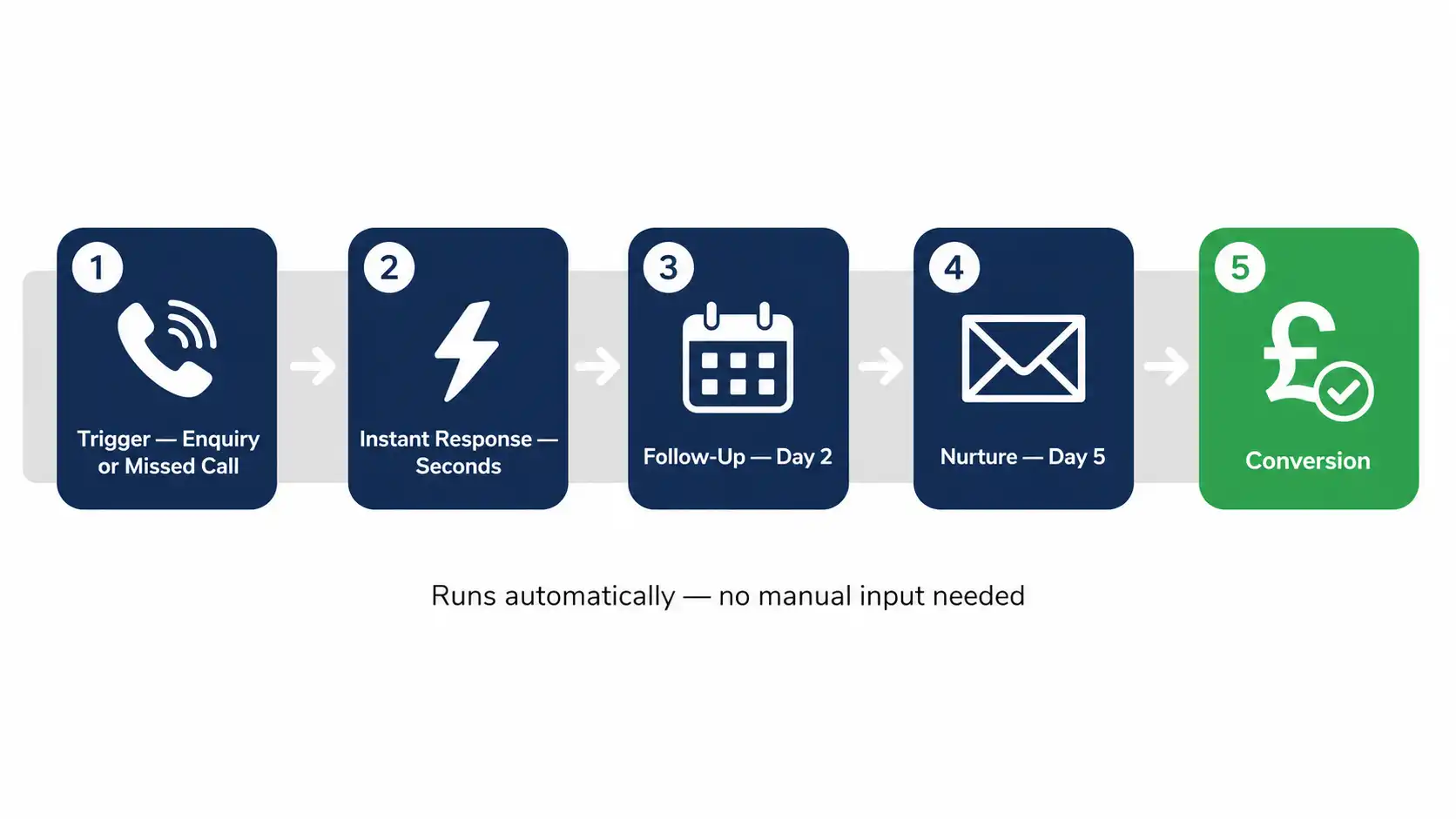
Start with a basic sequence: trigger action, immediate response, follow-up after X days, follow-up after Y days
Get that working, test it, refine it
Then add more complexity
Step Four: Test and Measure
Track open rates, click rates, response rates, and ultimately conversion rates
If something's not working, tweak it
Workflows aren't set-it-and-forget-it—they're set-it-and-improve-it
Our System makes all of this dead simple with drag-and-drop workflow builders, built-in analytics, and templates to get you started. You don't need to be a tech genius. If you can use email, you can build effective workflows.
The Profitability Impact of Proper Follow-Ups
Let's bring this back to what actually matters: making more money. That's why you're in business, right? Workflows that handle your follow-ups properly will directly impact your bottom line in three main ways:
Higher Conversion Rates
When you follow up consistently and professionally, more leads become customers
You're staying top of mind, building trust, and making it easy for people to take the next step when they're ready
Increased Customer Lifetime Value
Customers who feel valued and well-communicated with buy more, buy more often, and stick around longer
A good onboarding workflow reduces churn
Regular check-in workflows identify upsell opportunities
Re-engagement workflows bring back customers who might otherwise have been lost forever
Reduced Operational Costs
When your workflows handle routine communication automatically, your team has more time for high-value activities
You're not paying someone to send reminder emails or chase quotes—the system does it
That time can be spent on actual customer service, business development, or strategic thinking
I worked with a professional services firm that implemented comprehensive business automation workflows. Within six months, they'd increased their lead-to-customer conversion rate by 34%, reduced response time from hours to minutes, and freed up about 15 hours per week of admin time. That's nearly two full days back in the business every week. What's that worth to you?
Common Workflow Mistakes to Avoid
Before I wrap up, let me save you some headaches by highlighting the common cock-ups I see businesses make with workflows:
Mistake One: Too Many Messages Too Fast
Enthusiasm is great, but bombarding people is not
Space out your communication
Give people time to digest one message before sending the next
Mistake Two: Forgetting to Test
Always, ALWAYS test your workflows before activating them
Send yourself through the sequence
Check that links work, personalization displays correctly, and timing makes sense
The number of businesses that send out broken workflows is embarrassing
Mistake Three: Setting It and Actually Forgetting It
Workflows need maintenance
Business changes, offers change, contact details change
Review your workflows regularly and keep them current
Mistake Four: Being Too Salesy
If every message is "BUY NOW!", people will tune out fast
Mix in educational content, helpful tips, and genuine value
The sales opportunities will come naturally from the relationship you've built
Mistake Five: Not Segmenting
Sending everyone the same messages regardless of where they are in the customer journey is lazy and ineffective
Use tags, custom fields, and workflow branches to deliver relevant content to the right people
Ready to Build Workflows That Actually Boost Your Profitability?
I've spent years helping UK businesses implement automation systems that work. Not the complicated, expensive stuff that requires a team of developers. The practical, effective workflows that small and mid-size businesses can actually use.
If you're tired of leads slipping through the cracks, customers feeling neglected, and spending your evenings on admin that should be automated, let's have a chat. I'll show you exactly how workflows can transform your follow up game and make your business more profitable.
Our business automation solutions are designed specifically for businesses like yours—practical, affordable, and actually effective.
Get in touch:
📞07366 926333
Let's build workflows that actually work for your business. No fluff, no over-promising—just real results.
Key Takeaways
Follow-ups are where the money is: Most sales require multiple touchpoints, but most businesses give up too early. Automated workflows ensure consistent, professional follow-up without the manual effort.
Different situations need different workflows: New lead nurture, customer onboarding, re-engagement, and abandoned action workflows each serve specific purposes in your customer journey and profitability strategy.
Good automation enhances customer service: Workflows ensure nothing falls through the cracks, every customer gets timely attention, and your team can focus on high-value interactions rather than routine admin.
List building becomes systematic: Proper workflow automation captures and nurtures every potential customer, segments them intelligently, and delivers personalized communication that drives engagement and conversions.
Start simple and scale up: You don't need complex workflows from day one. Begin with one high-impact sequence, test it thoroughly, measure results, then expand your automation strategically.
Profitability comes from three areas: Workflows boost your bottom line through higher conversion rates, increased customer lifetime value, and reduce churn.

