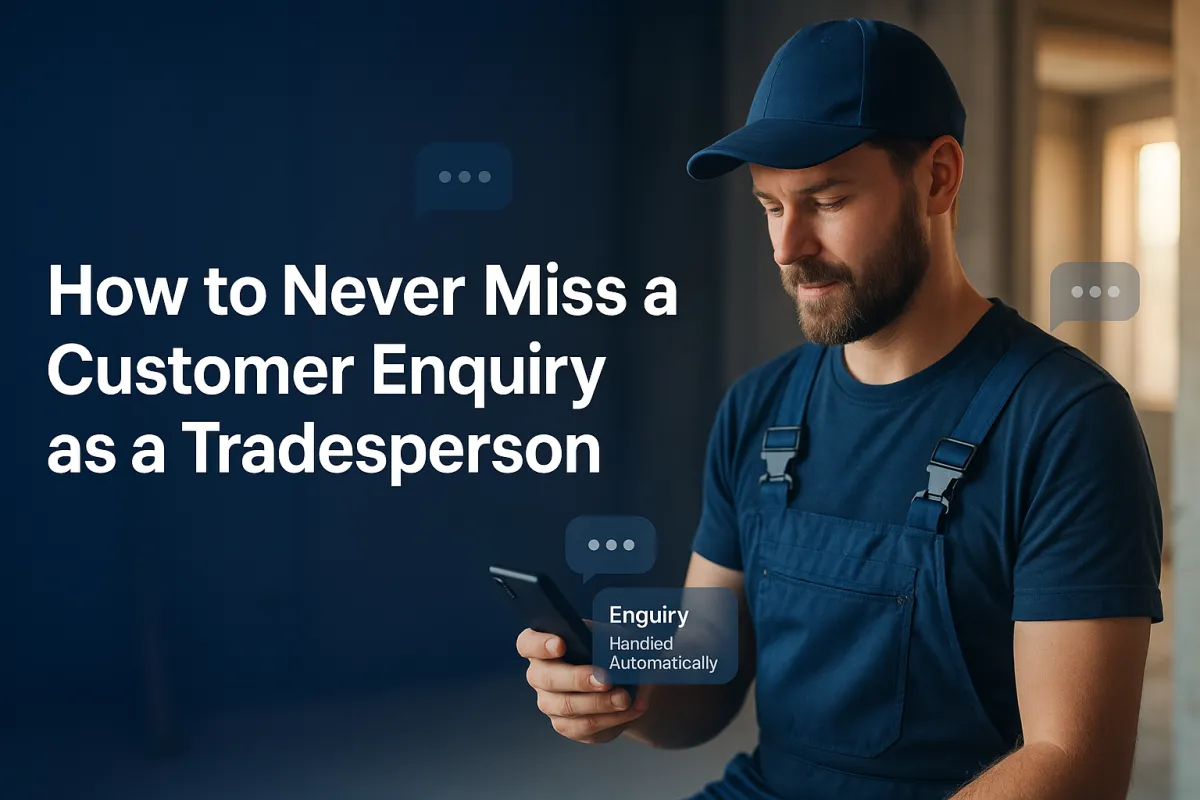
How to Never Miss a Customer Enquiry as a Tradesperson (Even at 2am)
The most reliable way to never miss a customer enquiry as a tradesperson is to have an automated response system in place that handles contact 24 hours a day. Even when you are on a job, driving between sites or finished for the day, missed calls get an immediate text response, website enquiries get an instant reply and follow-ups happen automatically - so no lead goes cold regardless of when it comes in.
Why Most Tradespeople Miss More Enquiries Than They Realise
Most tradespeople who miss enquiries are not being careless. They are busy doing exactly what they should be doing - working on the tools, focusing on the job in front of them, driving between sites or dealing with the hundred other things that come with running a trade business.
The problem is not the person. It is the system - or more accurately, the lack of one.
Here are the five most common ways enquiries slip through.
1. Missed Calls During the Working Day
When you are on a roof, under a floor or mid-way through a rewire, you cannot answer your phone. That is not a failure - that is the job. But the person calling does not know that. They just know the phone rang out, so they move on to the next number. That job is gone before you even knew it existed.
2. Website Enquiries That Sit Unanswered Until Evening
Most trade websites generate contact form submissions or chat messages during the day. If those sit in your inbox until you get home, the person who sent them has often already called someone else or moved on.
3. Social Media Messages Left on Read
Facebook and Instagram have become common ways for customers to reach out to tradespeople. Messages that go unanswered for hours - or days - signal that the business is not on the ball, even if the work itself is excellent.
4. After-Hours Enquiries Nobody Handles
A significant portion of people search for tradespeople in the evening, after work, when they have the time to sit down and sort their home. Those enquiries - sent at 8pm, 9pm or later - sit until morning, by which time the person may have already booked someone who responded that night.
5. Follow-Ups That Never Happen
Someone calls, you make a mental note to ring them back. But then the afternoon gets away from you. By the time you remember, it feels awkward to call. The lead quietly disappears.
What Does a Missed Enquiry Actually Cost?
It is easy to think of a missed call as just a missed call. But consider what it actually represents.
If your average job is worth £300 to £500, and you miss just three enquiries a week - through calls, messages and follow-ups - that is potentially £900 to £1,500 of work lost every single week. Over a month, that could be £4,000 to £6,000 in revenue that simply never made it into your diary.
And that is before you factor in the repeat work and referrals that come from every job booked. A single missed enquiry is rarely just one job.
Speed to Lead Matters More Than Most Tradespeople Realise
Research consistently shows that the business which responds first to an enquiry wins the job significantly more often than the one that responds best. Customers do not wait for the perfect tradesperson. They ring around, and they book whoever gets back to them first.
If a competitor responds within minutes - even automatically - and you respond hours later, the job is already gone.
What Customers Actually Do When You Do Not Respond
Understanding customer behaviour makes the impact of missed enquiries much clearer. When someone contacts a tradesperson and gets no response within a reasonable time, here is what typically happens:
They call the next business on the list
They submit the same enquiry to two or three tradespeople at once
They book whoever gets back to them first - not necessarily the best or cheapest
They form an impression of your business based on that first interaction, or lack of one
Customers do not think they must be busy on a job. They think they did not get back to me. That shapes how they perceive your professionalism before you have even had a chance to show your work.

How to Make Sure Every Enquiry Gets a Response
The solution is not to be available every minute of the day. That is not realistic and it is not sustainable. The solution is to have systems that handle initial contact on your behalf, so no enquiry falls through the cracks.
Here is how it works in practice.
Missed Call Text Back
When a call comes in while you are busy and you cannot answer, an automated text goes straight back to the caller. It lets them know they have reached the right business, that you are currently on a job, and gives them a simple next step - whether that is sending a message with their details or knowing you will call back shortly.
That one message keeps the conversation alive. The caller feels acknowledged and is far less likely to ring the next person on the list. This is one of the simplest and most effective tools available to any tradesperson, and it works from day one.
AI Voice Agent
For businesses that want to go a step further, an AI voice agent can actually answer calls when you cannot. It speaks professionally, answers common questions about your services, collects job details and lets the caller know what happens next. Instead of a missed call, you get a complete lead summary waiting for you when you finish the job.
Website and Social Media Chatbot
A chatbot on your website or Facebook page handles enquiries around the clock. It captures contact details, answers common questions, qualifies the enquiry and guides the person to the next step - whether that is booking a call, submitting job details or getting a rough idea of what is involved. This means your website works for you at 2am, not just during business hours.
Automated Follow-Up
Once an enquiry comes in, automated follow-up sequences handle the next steps - sending a confirmation, asking for more details, chasing if there has been no response and keeping the lead warm until you are able to speak directly. This removes the mental load of remembering to follow up and ensures consistent communication without any extra effort on your part.
What This Looks Like for a Real Trade Business
Imagine this scenario. It is Tuesday afternoon. You are on-site finishing a rewire. Three things happen between 2pm and 5pm.
A potential customer calls about a full bathroom installation. You cannot answer. They get an immediate text back, reply with their details and are told you will be in touch that evening. Someone fills in your contact form asking about an emergency call-out. They get an instant automated reply acknowledging their message and asking a couple of qualifying questions. A Facebook message comes in asking whether you cover their area and what your rough pricing looks like. The chatbot handles it, answers the questions and captures their contact details.
You finish the job at 5:30pm. Three qualified leads are waiting for you - none of them have gone cold, none of them have booked anyone else and all of them have had a professional first impression of your business.
That is the difference the right system makes.

Frequently Asked Questions
How do I stop missing calls as a tradesperson?
The most effective way is to have a missed call text back system in place. When a call comes in that you cannot answer, an automated message goes straight back to the caller so they know they reached the right business and what to expect next. This keeps leads warm and significantly reduces the number of potential customers who book elsewhere.
What happens to enquiries that come in overnight?
Without automation, overnight enquiries typically sit until morning - by which point many customers have already made contact with another business. With a chatbot or automated response system on your website and social media, those enquiries are handled instantly regardless of the time, so no opportunity is lost while you sleep.
Do automated responses feel impersonal to customers?
When set up correctly, automated responses feel professional and helpful rather than robotic. The key is to acknowledge the customer, give them a clear next step and follow up personally as soon as you are able. Most customers are simply glad to get a quick response - the fact that it was automated rarely matters to them.
How quickly should a tradesperson respond to an enquiry?
Research consistently shows that responding within five minutes of an enquiry dramatically increases the chance of booking the job compared to responding after an hour or more. The faster the initial response, the higher the conversion rate - which is precisely why automated instant responses are so valuable for trade businesses.
Can I use automation if I am a sole trader?
Yes - in many ways automation is even more valuable for sole traders, because there is no team to share the communication load. Missed call text back, automated follow-up and a chatbot can make a one-person trade business respond with the consistency and speed of a much larger operation.
Will automation help me get more reviews?
Yes. Automated review request messages - sent shortly after a job is completed - consistently generate more reviews than manual requests, simply because they happen every time without you having to remember. More reviews mean better visibility on Google and more trust from potential customers researching your business.
The Bottom Line
Missing enquiries is not usually a sales problem. It is a systems problem.
The work is there. The customers are searching for you. The calls, messages and website visits are coming in. The question is whether your business is set up to catch them properly - or whether some of that work is quietly going to a competitor who responded faster.
Fixing this does not require hiring staff or spending hours glued to your phone. The right automation handles the first response, keeps leads warm and makes sure nothing falls through the cracks - so you can get on with the job and know the business side is taken care of.
Find out how AI automation works for tradespeople
Related reading: Will AI Replace Tradespeople? The Honest Answer

