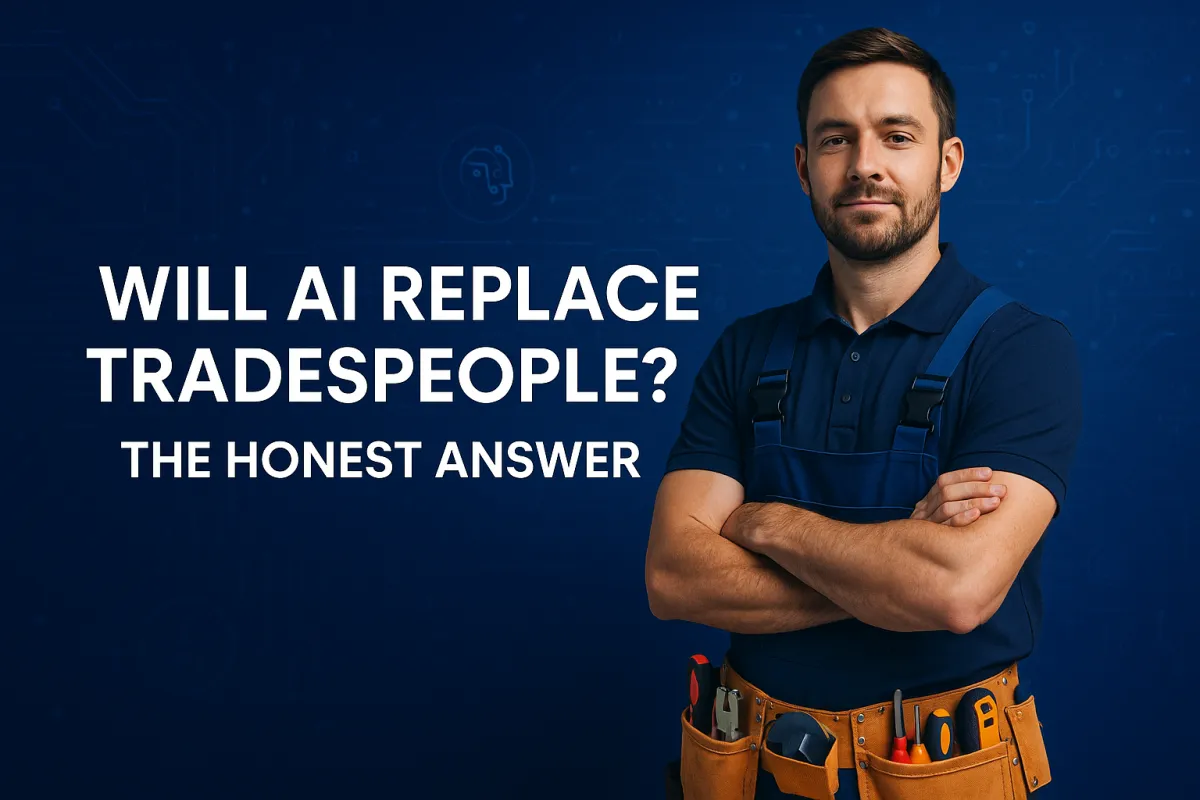
Will AI Replace Tradespeople? The Honest Answer
No. AI will not replace tradespeople. The hands-on skills, real-world problem-solving and customer trust that define trade work are things AI simply cannot replicate. What AI is doing - and doing fast - is changing how trade businesses handle their admin, calls and customer communication. The tradespeople who understand this difference will have a significant edge over those who do not.
Why Tradespeople Are Asking This Question Right Now
Barely a week goes by without a headline about AI taking someone's job. From call centre workers to copywriters, the conversation around automation and employment is impossible to ignore. So it makes sense that tradespeople - electricians, plumbers, roofers, joiners, plasterers - are starting to wonder where they stand.
The short answer is: you are in a much stronger position than most. (phew!)
But the longer answer is worth understanding properly, because the picture is more nuanced than a simple yes or no.
The Honest Answer: AI Will Not Replace Tradespeople
Let's be honest about this.
AI excels at tasks that can be broken down into clear, repeatable steps - writing emails, answering standard questions, generating reports, processing data and the biggest one of all - connecting multiple software together & communicating with each other. In many industries, that is already replacing roles. (Basically, if it's an admin task - you can automate it)
Skilled trade work is fundamentally different.
Physical Skill and Dexterity
Rewiring a consumer unit, soldering pipework, fitting a roof in awkward conditions, plastering a wall to a smooth finish - these tasks demand fine motor skills, real-time physical adjustments and hands that can respond to what they are touching. Robotics can replicate some fine motor movements in controlled, lab-like environments. (You may have seen a robot lay bricks for instance? - and do it really well) BUT....They cannot work in a cramped loft, a tricky kitchen extension or an older property full of surprises.
Problem-Solving in Unpredictable Environments
No two jobs are the same. An electrician diagnosing a fault, a plumber tracing a hidden leak, a roofer assessing storm damage - these require on-the-spot thinking in environments that change every single time. AI systems struggle significantly when faced with unstructured, variable real-world settings. That is precisely why automation is far less effective in the trades than in controlled factory environments.
Trust and the Human Element
When someone lets a tradesperson into their home or business, they are making a trust decision. They want someone who can listen to their problem, explain what needs doing in plain English and give them confidence that the work will be done properly. Empathy, communication and reading a customer mood are uniquely human qualities. No AI can replace the tradesperson standing in someone's kitchen, explaining what needs to be done and giving the homeowner confidence that the job is in the right hands.
The work itself is safe. The skilled, hands-on part of being a tradesperson is not going anywhere.
But Here Is What AI Is Changing - Fast
Just because AI will not replace the trade itself does not mean nothings changing. And this is the part worth paying attention to.
Right now, only around 5% of UK tradespeople actively use AI tools in their work. That number is growing fast. The tradespeople who understand what AI can - and cannot do are already starting to operate more efficiently than those who do not.
AI is changing the business side.
Not the skills side.

Admin and Paperwork
Generating quotes, sending invoices, confirming bookings, writing follow-up messages, requesting reviews - these are repetitive tasks that eat into evenings and weekends for most tradespeople. AI can handle all of this automatically, without you having to sit down and do it manually every time.
Answering Calls and Enquiries
When you are on the tools, in a roof space or driving between jobs, your phone rings. You cannot answer. That caller does not know you are busy - they just know you did not pick up. AI voice agents and automated responses can handle that initial contact, keep the lead warm and collect the right details so you can follow up properly when you are free.
Following Up Leads
A lot of trade work goes to whoever responds fastest - not necessarily whoever does the best work. AI automation can send an immediate, professional response to an enquiry at any time of day, including evenings and weekends when most people browse and make enquiries, so you are not losing work to a slower competitor.
Keeping Customers Updated
Are you still coming? Did you get my message? These kinds of messages pull your focus away from the job all day. Automated updates and reminders can handle a lot of this without you having to manually respond to each one.
The Real Risk: Not AI Replacing You - But Other Tradespeople Using AI to Beat You
Here is the thing most articles on this topic miss.
The question is not whether AI will replace tradespeople. It will not. The real question is whether tradespeople who use AI will win more work than those who do not.
Think about it this way.
Two electricians. Same area. Similar quality of work. One answers every enquiry within minutes, follows up automatically, never misses a call and sends booking confirmations and reminder texts without a second thought. The other is great at the job but slow to respond, loses calls when on-site and does all their admin in the evenings.
Who gets more of the available work?
That gap is not about the quality of the electrical work. It is about response speed, consistency and customer experience - all of which AI can improve significantly, for any tradesperson willing to use it.
The competitive risk is not AI replacing your trade. It is other tradespeople using AI to look faster, more professional and more reliable than you - before you even get a chance to show the quality of your work.
Related reading: How to Never Miss a Customer Enquiry as a Tradesperson (Even at 2am)
What This Means for Your Trade Business in Practice
You do not need to become a tech expert. You do not need to understand how AI works under the hood. What matters is understanding which parts of your business could run faster and more consistently with the right setup in place.
For most trade businesses, it comes down to four key areas:
Missed calls - if a potential customer cannot reach you, are they getting an immediate response or going to the next name on the list?
Enquiry follow-up - are your quote requests being followed up consistently, or do some go cold because life gets busy?
Admin time - how many hours a week are you spending on tasks that could happen automatically?
Customer communication - are your customers getting timely updates, or are they chasing you because they have not heard anything?
None of these require you to change the way you do the actual work. They are about making the business side run more smoothly so that more of the opportunities already coming in actually turn into paid jobs.
Frequently Asked Questions
Will AI take over skilled trade jobs in the UK?
No. Skilled trades require physical dexterity, real-world problem-solving and adaptability in unpredictable environments - all things AI cannot reliably replicate. The UK also faces ongoing skills shortages in construction and building services, which means demand for qualified tradespeople is expected to remain strong well into the future.
Are tradespeople at risk of automation?
Tradespeople are among the least exposed workers to automation. Jobs involving hands-on skills, on-site problem-solving and customer-facing work are significantly harder to automate than office-based or administrative roles. Some tools - like smart diagnostic devices - are becoming part of the trades, but they support rather than replace the tradesperson doing the work.
How is AI already being used in the trades?
AI is being used by some trade businesses to handle missed call responses, automate customer follow-up, manage booking confirmations and reminders, generate quotes faster and maintain a consistent social media presence. These are business administration tools - not replacements for the skilled work itself.
Should tradespeople be worried about AI?
Not about being replaced - but it is worth paying attention to how AI is changing customer expectations around response speed and communication. Customers increasingly expect fast replies and clear updates. AI can help trade businesses meet those expectations without adding more pressure on the tradesperson doing the work.
What is the biggest AI opportunity for tradespeople right now?
The biggest opportunity is using AI to capture more of the work that is already coming in. Most trade businesses lose enquiries through missed calls, slow follow-up and inconsistent communication - not through lack of skill or reputation. Fixing those gaps does not require changing how you work on the tools.
Is AI automation GDPR compliant for UK tradespeople?
Yes, when set up correctly. Reputable AI automation systems used by UK trade businesses operate within GDPR guidelines, using compliant data handling and secure communication tools. Any provider worth working with should be able to explain clearly how your customer data is handled and stored.

The Bottom Line
AI will not replace tradespeople. The hands-on skill, judgment and trust that define trade work are not going anywhere.
What AI is replacing - for the tradespeople who choose to use it - is the hours lost to admin, the calls missed while on-site and the leads that go cold because follow-up was slow.
The tradespeople who win over the next five years will not be those who avoided AI. They will be the ones who understood what it could actually do for them - and used it before everyone else did.
If missed calls, slow follow-up or admin time are costing you work, we can show you exactly where the gaps are and what would make the biggest difference for your trade business.
Find out how AI automation works for tradespeople
Read next: How to Never Miss a Customer Enquiry as a Tradesperson (Even at 2am)

