How Restaurants Can Use AI to Improve Guest Experience, Reduce Costs and Increase Revenue
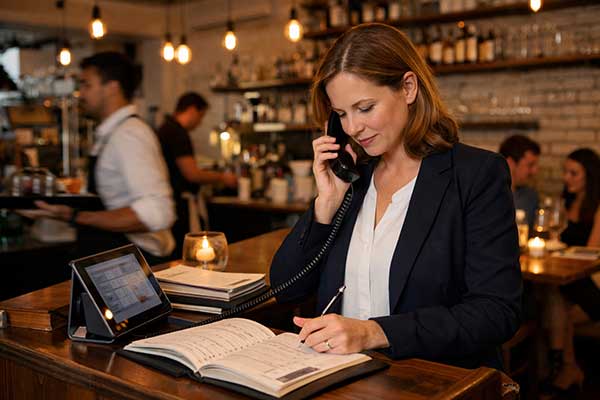
Running a restaurant is one of the most demanding businesses there is (I know because I used to own one!). Thin margins, high staff turnover, last-minute no-shows (people don't appreciate, how much, the loss of profit can have on a business by simply not turning up) , phones ringing during service, and guests who expect a flawless experience every single time. Oh yes, I forgot - they are scamming you now with credit card refunds. Its fair to say "You are managing a lot", and usually with a minimal team.
So when people talk about the use of technology like AI in restaurants, it is easy to roll your eyes. Another trend promising to fix everything. Another piece of software that looks impressive in a demo and then sits unused in the back office.
But the fact of the matter is: The restaurants that are quietly pulling ahead right now are not doing anything radical. They are just using practical, affordable tools to help "plug the gaps" that cost them time and money every day. Things like missed phone calls (before, during and after service), slow booking responses, manual follow-ups or worst still - NO follow ups!, and social media that never gets updated, responded too or irregular posting.
Hopefully this post will "open your eyes" to how AI in restaurants & the hospitality sector is being used in the real world — not theory, not "half baked" ideas — just straightforward tools that work for independent restaurants, pub groups, hotel restaurants, and hospitality businesses across the UK.
Quick Answer:
AI in restaurants refers to the use of artificial intelligence tools to automate routine tasks, improve communication with guests, manage bookings, handle missed calls, and support marketing. Restaurants use AI to save staff time, respond to customers faster, reduce costs, and increase revenue without needing a large tech team to run it.
What Is AI in Restaurants and Why Does It Matter Now?
AI in restaurants does not mean robots cooking your food or replacing your head chef. In practice, it means software that can do repetitive, time-consuming tasks automatically — responding to enquiries, confirming bookings, sending follow-up messages, posting on social media, and capturing leads that would otherwise slip through the net.
The reason it matters now is simple: guest expectations have shifted. People expect to get a response quickly, whether they are messaging on Instagram at 10pm or calling to book a table during Friday lunchtime. If your restaurant cannot respond fast enough, they book somewhere else. It is not personal. It is just how it works.
The good news is that the tools available to independent restaurants and hospitality businesses have come down dramatically in cost. What once required a large enterprise budget is now accessible to a 30-cover bistro or a small hotel group.
How Can Restaurants Use AI in Their Day-to-Day Operations?
This is where it gets practical. AI in restaurant operations covers a wider range of tasks than most owners realise, and the best part is that most of it runs in the background without you lifting a finger once it is set up.
Here are the main areas where restaurants are already using AI tools effectively:
Booking Enquiries and Reservations
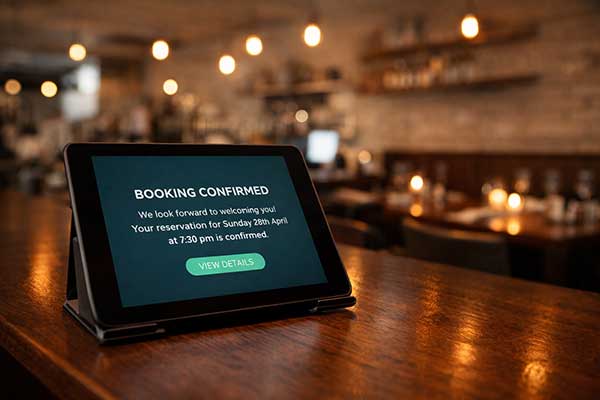
An AI chatbot on your website can handle booking enquiries around the clock. A guest lands on your site at 11pm, wants to book for six on Saturday, and instead of filling in a form and waiting until morning for a reply, they get an instant response, confirmation, and a follow-up message — all automatically.
This is not just convenient for the guest. It removes a chunk of work from your front-of-house team, who can focus on the people already in the room.
Missed Call Recovery
How many calls does your restaurant miss during a busy service? One a day? More? Each one is a potential booking walking straight to a competitor.
A missed call text-back system sends an automatic text message to anyone whose call goes unanswered, within seconds. Something like: "Sorry we missed your call — we are probably mid-service. Reply here and we will get back to you shortly." That small act keeps the conversation alive and recovers bookings that would otherwise be lost.
Guest Follow-Up and Loyalty
After a guest dines with you, what happens next? In most restaurants, nothing. They leave, life moves on, and unless they choose to come back, you have no contact. AI-powered CRM automation can change that by sending a thank-you message after a visit, a birthday offer, or a seasonal promotion — all triggered automatically based on guest data you are already collecting.
This is how you build repeat business without spending hours at a keyboard.
Social Media Management
Keeping your restaurant visible on Instagram and Facebook takes time most owners do not have. AI social media management tools can schedule posts, create captions, and keep your channels active — so your online presence does not go quiet every time you get busy.
How Does AI Improve Guest Experience in Hospitality?
The honest answer is that AI improves guest experience by making your restaurant feel more responsive, more organised, and more attentive — even when your team is stretched.

Consider the guest journey from the moment they find your restaurant online. They might visit your website, send a message on social media, call to check availability, book a table, receive a reminder, and then get a follow-up after their visit. Every single one of those touchpoints is an opportunity to impress them — or to lose them.
AI guest experience tools work by making each of those touchpoints consistent and fast. The chatbot responds in seconds. The booking confirmation arrives immediately. The reminder goes out the day before. The thank-you message lands the next morning. None of it requires your staff to do anything. It just happens.
For hotel food and beverage operations, this is particularly valuable. A hotel restaurant serves guests who are already on-site, guests who book in advance from outside, and walk-ins — all with different needs. AI tools can handle each type of enquiry differently, routing them to the right response automatically.
Can AI Actually Reduce Costs in Restaurants?
Yes, and it does it in ways that add up quickly.
The obvious saving is staff time. When an AI voice agent can handle routine phone calls — taking bookings, answering questions about opening hours, managing cancellations — your front-of-house team spends less time on the phone and more time with guests in the room.
The less obvious saving is in no-shows. Automated booking reminders with a simple reply option ("Reply YES to confirm or NO to cancel") have been shown to cut no-show rates meaningfully at restaurants that use them. Fewer empty tables means more revenue from the same fixed costs.
There is also the cost of missed calls themselves. If your restaurant misses one booking call per day, and your average booking is worth £80 to £100, that is potentially £1,500 to £2,000 of lost revenue every single month. A missed call text-back system costs a fraction of that to run.
For a complete breakdown of what actually reduces no-shows in UK restaurants, read our post on how to reduce restaurant no-shows.
If reducing platform commission is also a priority, read our guide on how to get more direct restaurant bookings without paying commission.
Will AI Replace Restaurant Staff?
This is the question that comes up most often, and the answer is no — at least not in the way people fear.
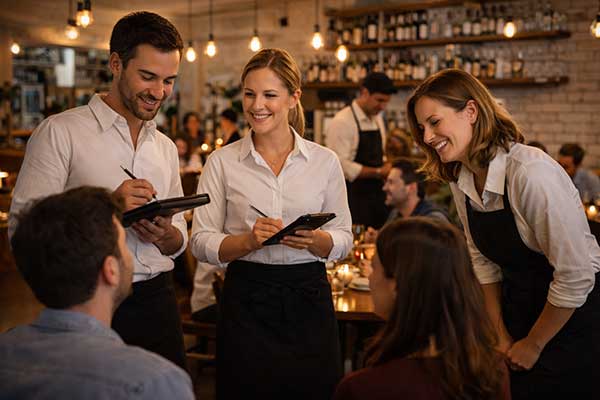
AI for hospitality is not about removing people from your restaurant. Your guests did not choose to dine with you because they wanted to talk to a chatbot. They came because of your food, your atmosphere, and your team. Nobody is going to automate that.
What AI does is take the administrative pressure off your staff so they can do what they are actually there for. Instead of spending twenty minutes at the start of a shift returning calls and responding to booking emails, your team can spend that time setting up the room properly, briefing on the specials, or giving attention to the guests already sitting down.
Think of it less as replacement and more as a relief. The repetitive, time-consuming tasks get handled automatically. The human moments — the warm welcome, the recommendation on the wine list, the birthday surprise — stay exactly where they belong.
A Real-World Example: How One Restaurant Group Turned Missed Calls Into Bookings
A family-run restaurant group with three sites across Cheshire had a problem that will sound familiar. During the lunch and dinner service, the phone rang constantly. Half the calls were missed. The team would try to call back when they could, but by then most people had already booked somewhere else or simply stopped trying.
The owner reckoned they were missing at least two or three bookings a day across the group. At an average spend of £45 per head with tables of two to four people, that was a significant amount of revenue disappearing every week without anyone realising.
They set up a missed call text-back system and an AI voice agent to handle out-of-hours calls. Within a few weeks, the pattern had changed. Missed calls were no longer dead ends. Guests got an instant message, replied with their details, and the booking was confirmed — often without the team getting involved at all.
They also added an AI chatbot on their website to handle the wave of enquiries that came in after they updated their menus. Instead of the manager spending an hour each morning answering the same questions, the chatbot handled them overnight and passed through only the enquiries that needed a personal response.
The result was not just more bookings. The team felt less frantic. Service quality went up because staff were not distracted by the phone. And the owner finally had a Sunday that did not involve catching up on messages.
If you want to explore what this could look like for your restaurant, book a free discovery call with the team at AI Bridge Club. We will take a look at where you are losing time and bookings right now and show you exactly what can be fixed — no jargon, no pressure.
What Are the Best AI Tools for Restaurants to Start With?
If you are new to this and not sure where to begin, the most effective approach is to start with the areas causing the most pain right now.

For most restaurants, that is one of three things: missed calls, slow responses to online enquiries, or a social media presence that has gone quiet. Each of those has a specific AI tool that addresses it directly.
Our dedicated page on AI for restaurants and hospitality businesses covers all of this in detail, including how each tool works, what it costs, and what you can expect to see change. It is a good place to start if you want a clear picture of what is available before you commit to anything.
The tools themselves — AI chatbots, AI voice agents, missed call text-back, CRM automation — are not complicated to run once they are set up. The setup is the bit that takes knowledge and experience. That is where working with a specialist makes the difference.
AI in restaurants is not about doing something radical. It is about filling in the gaps that are costing you bookings, time, and money every day — and doing it in a way that your team barely notices because it just works in the background.
For a full walkthrough of how restaurant chatbots handle bookings, allergens and out-of-hours enquiries, see our post on AI chatbots for restaurants.
Ready to See What AI Could Do for Your Restaurant?
The restaurants making the most of these tools are not the biggest or the most tech-savvy. They are the ones who decided to stop losing bookings to missed calls and slow replies, and did something about it.
If you are curious about where AI in restaurants could make a practical difference for your business, start with our guide to AI for restaurants and hospitality businesses. Or if you would rather just have a conversation, book a free discovery call and we will talk it through with you.
PLUS: If you need answers to any AI questions, get in touch - we are here to help!
No complicated tech. No long contracts. Just practical tools that work.

